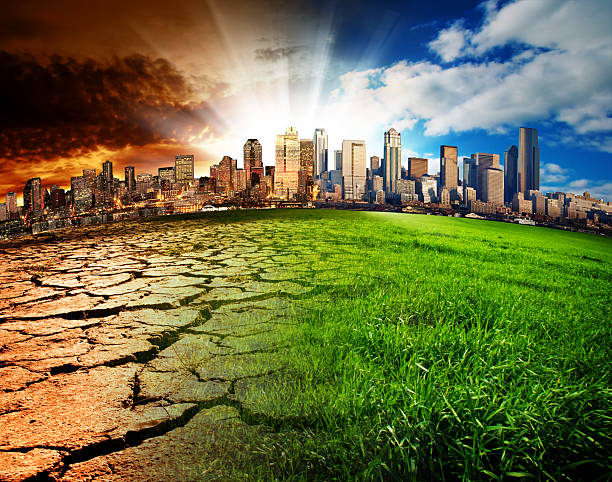
Climate change is one of the most significant environmental and development challenges facing communities around the world. It affects agriculture, water resources, human health, livelihoods, biodiversity, and the stability of ecosystems. While climate change is a global issue, its effects are experienced locally, particularly by communities whose livelihoods depend heavily on agriculture and natural resource
What Is Climate Change?
Climate change refers to long-term changes in temperatures and weather patterns. Some changes occur naturally, but human activities have become the main driver of the warming observed since the middle of the 20th century.
The burning of fossil fuels such as coal, oil, and natural gas releases greenhouse gases into the atmosphere. Deforestation, certain agricultural practices, industrial activities, and waste management also contribute to greenhouse gas emissions.
These gases trap heat in the atmosphere, causing the Earth's average temperature to rise and influencing weather and climate systems.
Major Causes of Climate Change
Several human activities contribute to climate change.
Burning of Fossil Fuels
The use of coal, petroleum, and natural gas for electricity generation, transportation, industries, and other activities produces carbon dioxide and other greenhouse gases.
Deforestation
Forests absorb carbon dioxide from the atmosphere and store carbon. When forests are cleared or degraded, this carbon-storage capacity is reduced, while some of the stored carbon is released into the atmosphere.
Agriculture
Agriculture contributes to greenhouse gas emissions through activities such as livestock production, fertilizer use, rice cultivation, and changes in land use. At the same time, farmers are among the people most directly affected by changing weather conditions.
Waste
Poor waste management can contribute to greenhouse gas emissions. Organic waste placed in landfills can produce methane as it decomposes without oxygen.
How Climate Change Affects Communities
Climate change can affect communities in many interconnected ways.
Agriculture and Food Security
Changes in rainfall patterns, increasing temperatures, droughts, floods, and extreme weather events can affect crop production and livestock. Farmers may experience reduced yields, crop failures, livestock losses, and increased pressure from pests and diseases.
Food insecurity can become more severe when households lose income or when food prices increase following production shortages.
Water Resources
Changing rainfall patterns and prolonged droughts can reduce the availability of water for households, agriculture, livestock, and businesses. Heavy rainfall and flooding can also contaminate water sources and damage water infrastructure.
Protecting water catchment areas, harvesting rainwater, and promoting efficient water use can help communities cope with changing conditions.
Human Health
Climate change can influence human health through heat exposure, changing patterns of some infectious diseases, food and water insecurity, air pollution, and injuries associated with extreme weather events.
Strong health systems, public awareness, clean water, sanitation, proper nutrition, and effective disease surveillance are important components of climate resilience.
Biodiversity and Ecosystems
Changes in temperature and rainfall can place pressure on forests, wetlands, rivers, wildlife, and other ecosystems. When ecosystems are degraded, communities may also lose important services such as clean water, fertile soils, pollination, and protection from floods.
Climate Change in Kenya
Kenya's economy and many household livelihoods depend significantly on agriculture, livestock, water resources, and natural ecosystems. Climate variability and climate-related hazards can therefore have serious social and economic consequences.
Droughts and floods can disrupt agricultural production, damage infrastructure, affect water availability, and reduce household incomes. Communities in vulnerable areas may face additional challenges when climate-related shocks occur repeatedly.
Addressing these challenges requires action from national and county governments, communities, farmers, businesses, civil society organizations, schools, and individuals.
What Is Climate Adaptation?
Climate adaptation involves adjusting practices, systems, and infrastructure to reduce the harmful effects of climate change.
Examples include:
- Promoting drought-tolerant and climate-resilient crops.
- Practicing water harvesting and conservation.
- Improving early-warning systems for droughts and floods.
- Planting and protecting trees.
- Strengthening health systems and disease surveillance.
- Improving drainage and flood-management infrastructure.
- Diversifying household sources of income.
- Promoting climate-smart agriculture.
- Protecting wetlands, forests, and water catchment areas.
Adaptation is particularly important for communities that are already experiencing climate-related impacts.
Reducing Greenhouse Gas Emissions
Climate mitigation involves reducing greenhouse gas emissions or increasing the amount of carbon dioxide removed from the atmosphere.
Communities and institutions can contribute by adopting renewable energy, improving energy efficiency, reducing unnecessary waste, protecting forests, using cleaner transport options, and supporting sustainable land-use practices.
Even small actions can contribute when they are adopted widely and supported by effective policies and investments.
The Role of Communities and Young People
Climate action is not only the responsibility of governments and international organizations. Communities and young people can play an important role in protecting the environment and building resilience.
Schools, community groups, churches, youth organizations, farmers' groups, and civil society organizations can support environmental education, tree planting, waste management, water conservation, and sustainable agriculture.
Young people can also contribute through innovation, entrepreneurship, advocacy, research, and the development of practical solutions to environmental challenges.
Building a Climate-Resilient Future
Building resilience requires more than responding to disasters after they occur. Communities need long-term planning that considers climate risks when making decisions about agriculture, health, water, housing, infrastructure, and economic development.
Investing in education, renewable energy, sustainable agriculture, ecosystem restoration, disaster preparedness, and climate-resilient infrastructure can help reduce vulnerability while creating opportunities for sustainable development.
Conclusion
Climate change is a complex challenge, but communities are not powerless. Protecting natural resources, reducing emissions, preparing for climate-related hazards, and investing in resilient livelihoods can make a meaningful difference.
The path toward a climate-resilient future requires cooperation. Governments, communities, organizations, businesses, farmers, schools, and individuals all have roles to play. By combining local knowledge with scientific evidence and practical action, we can protect livelihoods, improve community well-being, and create a healthier environment for future generations.
Climate action begins with informed communities and practical solutions.